







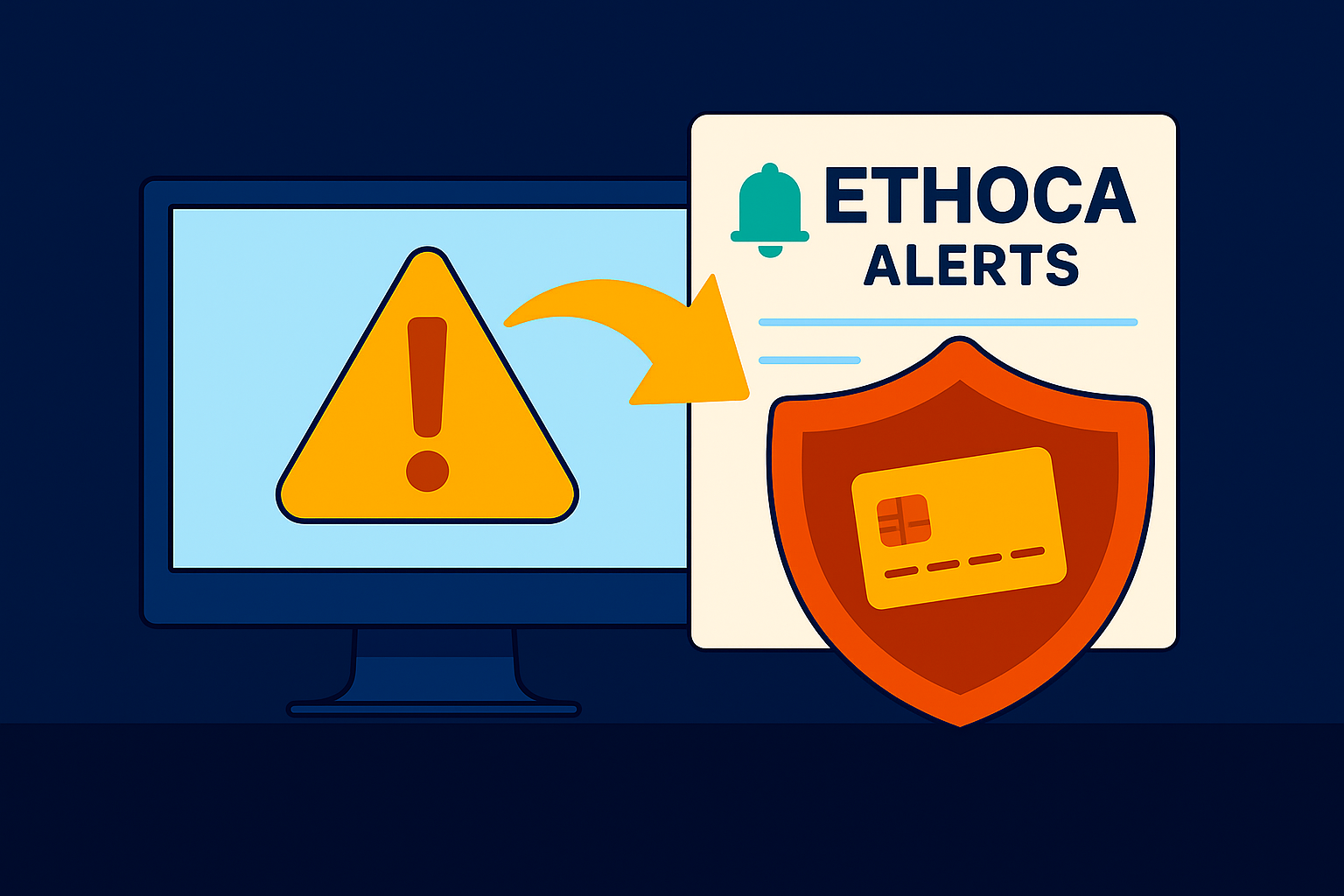
One chargeback can trigger ten more. A cardholder files a fraud claim, your team never sees it coming, and suddenly, your dispute ratio is over the limit. Ethoca alerts were built to give you a heads-up before things spiral. But do they really stop chargebacks, or just delay the inevitable?
What Are Ethoca Alerts?
Ethoca alerts are early fraud and dispute notifications sent directly from issuing banks. When a cardholder flags a charge as suspicious, the bank pushes the data to Ethoca. Ethoca then notifies the merchant before a formal chargeback is filed.
You’re not reversing a chargeback. You’re stopping one before it lands.
How the Alert System Works
The entire process typically takes just a few minutes:
- The cardholder reports fraud or billing confusion to their bank.
- The issuer notifies Ethoca of the dispute.
- Ethoca sends an alert to the merchant.
- The merchant decides whether to issue a refund, cancel fulfillment, or ignore the alert.
- The issuer is updated. If a refund was issued in time, the chargeback may be canceled.
The key advantage here is speed. Most alerts are delivered within 5 to 15 minutes of the cardholder’s call.
How Broad Is Ethoca’s Coverage?
Ethoca has the widest issuer network of any alert provider. It covers over 5,000 banks globally and is especially strong in Mastercard transactions, with claimed coverage of nearly 95 percent.
However, there are limitations:
- Visa participation is more limited.
- Some issuers send alerts only for fraud, not service disputes.
- If a merchant ignores or delays too often, that bank may stop sending alerts altogether.
Can You Filter or Opt Out of Alerts?
Not really. You can configure rules to auto-refund or flag specific types of alerts, but you can’t control what banks send. If you routinely decline to respond, some issuers will stop sending alerts altogether, forcing disputes straight to chargeback.
Think of this less as a subscription and more as a reputation. If your alert response is strong, your coverage holds up. If not, the system starts bypassing you.
What Do Ethoca Alerts Cost?
Alert pricing is usually flat-rate, per alert. Most direct setups and reseller plans charge between $35 and $40 per alert. High-volume merchants may be able to negotiate lower fees.
Now compare that with a typical chargeback:
- $20 to $100 in chargeback fees
- Lost inventory or digital product access
- Higher processing fees from elevated dispute ratios
- Potential merchant account termination if chargeback thresholds are breached
In this context, a $35 alert that helps avoid a $400 loss makes financial sense.
Making Alerts Part of Your Strategy
Ethoca alerts aren’t just for reactive refunds. The real value is in using the data strategically. Here’s how smart merchants get more from the system:
1. Automate Low-Risk Refunds
Auto-refund digital goods or small-ticket transactions below a set amount. This keeps your team focused on alerts with higher potential losses.
2. Intercept Physical Shipments
Route alerts to warehouse operations immediately. Canceling a shipment before it leaves can save you both inventory and shipping costs.
3. Feed Data into Risk Models
The alert includes the card BIN, location, and other metadata. Feed this into your fraud rules to identify patterns and tighten filters.
4. Review Outcomes Weekly
Compare the number of alerts against avoided chargebacks. Track ROI clearly by measuring how many alerts resulted in canceled chargebacks, refunds, or fulfilled orders.
Limitations to Keep in Mind
Ethoca alerts aren’t foolproof. They have clear advantages, but they’re not a replacement for long-term prevention.
- Not every issuer participates, especially for non-Mastercard brands.
- Some disputes don’t generate alerts at all.
- If you miss the alert window (sometimes as short as 24 hours), the chargeback can still go through.
- If you refund and the chargeback still posts, you’re out both the alert fee and the refund.
Do You Need Verifi Alerts Too?
In many cases, yes. Verifi covers roughly 1,000 banks, mostly US-based, and has a stronger reach with Visa issuers. If your transactions are global, running both Verifi and Ethoca helps close the coverage gap.
Ethoca is strongest internationally and with Mastercard. Verifi handles more Visa and US-based issuers. For most merchants, combining both is the best way to intercept the widest range of disputes.
Quick Setup Guide for Ethoca Alerts
Want to get started? Here’s what you’ll need:
- Choose how to receive alerts: direct API or through a provider.
- Set clear rules for refunds, cancelations, and investigations.
- Route alerts to fulfillment, fraud, and customer support teams.
- Log alert response times to meet issuer windows.
- Review chargeback rates monthly to track performance.
Implementation time is usually under a week if you're using a partner. Direct API integration can take a bit longer, depending on your development resources.
Conclusion
Ethoca alerts won’t stop every chargeback, but they cut off the worst ones at the source. They give merchants a few crucial hours to act, instead of letting weeks pass before hearing about a dispute. Use them strategically by integrating alerts into your ops, automation, and fraud logic, and they become a powerful piece of your chargeback defense.
FAQ: Ethoca Alerts
How fast do Ethoca alerts come in?
Most alerts are delivered within 5 to 15 minutes after the cardholder contacts their bank. This gives merchants a tight but manageable window to act before the dispute escalates.
What types of disputes do alerts cover?
Mainly fraud claims. Some issuers also send alerts for service disputes like “product not received,” but this varies. Always combine alerts with strong customer service and delivery tracking.
Do I have to refund every alert?
No. You can choose to cancel the order, investigate, or do nothing. But if you don't act in time, the chargeback may still go through. Many merchants set thresholds to automate responses.
Will Ethoca alerts stop chargebacks from happening?
If you respond in time, yes. The alert acts as a warning before the chargeback is filed. If you refund or cancel quickly, the bank may cancel the chargeback process entirely.
Can Ethoca alerts be integrated with my existing fraud tools?
Yes. If you use a partner platform, the alerts can be mapped directly into your fraud and order management systems. This makes it easier to automate actions and improve speed.
Outsmart Chargebacks Before They Even Start
Chargeblast connects Ethoca alerts, Verifi data, and your fraud stack into a single, intelligent dashboard. Use real-time alerts to pause shipments, refund faster, and train your fraud filters. Prevent chargebacks before they escalate and keep your dispute ratio under control. Ready to take full control? Let’s talk.